
Preventive Maintenance Compliance: Best Practices for Better Asset Reliability
Failure to implement preventative procedures or fully bypassing them would surely result in unscheduled downtime, extra manpower and recurrent failures. Finally, although most teams have a maintenance plan, it is a separate challenge to execute it properly when priorities change or the floor gets chaotic. Preventive maintenance compliance, or PMC, is best suited to tackling this issue head-on. Once you have completed the planning and scheduling processes, it will tell you whether or not everything is really working effectively. Here we are going to discuss what PMC really is, how to monitor it, and seven practical strategies that you can implement to improve your compliance rate without adding administrative procedures or increasing your backlog.
What is PMC or Preventive Maintenance Compliances?
Keeps a business on track with its planned preventative maintenance (PM) program. This is referred to as preventative maintenance compliance (PMC). “One part of knowing if a maintenance program is effective is how well the scheduled tasks are being done on time and correctly.” As a PMC you are not only doing PM tasks but also keeping thorough records, following safety laws and constantly doing the best maintenance possible. A high PMC rate suggests that you are repairing before failure occurs. This leads to fewer unplanned equipment breakdowns and extends the life of assets.
Why is PMC Important?
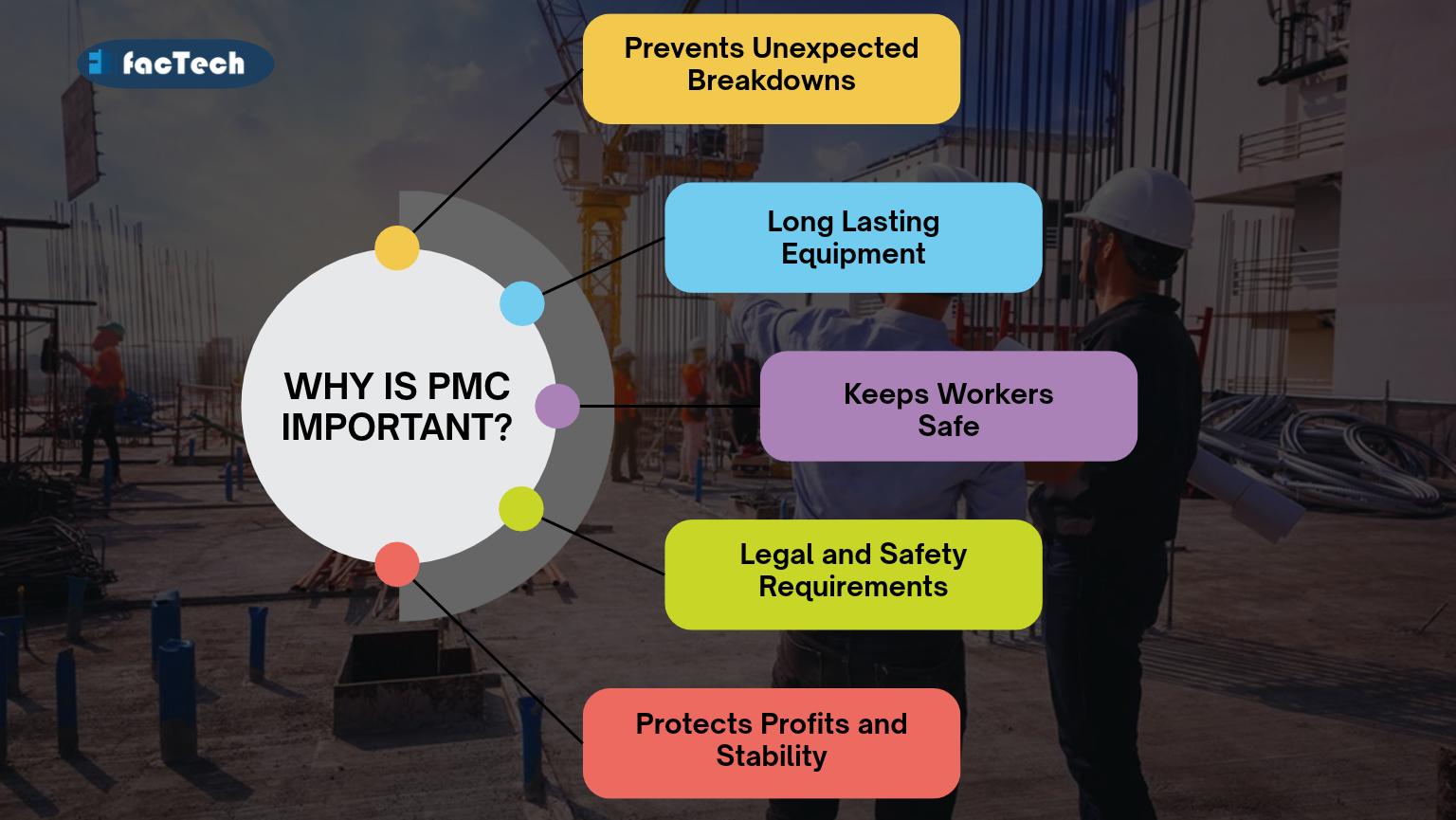
Prevents Unexpected Breakdowns: Timely scheduled repair discovers little equipment problems early, before they turn into surprising big breakdowns that halt production and make consumers wait for their orders.
Long Lasting Equipment: Regular maintenance reduces daily wear and tear so machines continue to work properly for many more years and you don’t have to pay as much for new ones.
Keeps Workers Safe: Proper maintenance on machinery greatly decreases the chances of breakdowns and on-the-job accidents allowing for a safer working environment for everyone, day in and day out.
Legal and Safety Requirements: There are strict laws in many areas that specify equipment should be tested routinely. By keeping clear repair logs and tight compliance, firms can avoid significant fines and pass inspections.
Protects Profits and Stability: Reliable equipment means predictable daily operations, no lost sales due to work stoppages, and the highest return from the money the company invests in its assets.
How PMC Work
Preventive Maintenance Compliance (PMC) is put into place through a structured process that includes planning, carrying out, and keeping an eye on things. Setting up a full preventive maintenance plan is the first thing that needs to be done. This schedule should be based on what the manufacturer says, data from past maintenance, and what the business needs. It should list the exact maintenance tasks that need to be done on each asset, how often they need to be done, and what tools are needed. Asset criticality analysis can help you figure out which pieces of equipment are the most important.
After making a repair plan, the next step is to carry out the tasks that were planned. This means giving qualified technicians work orders, making sure they have the right tools and materials, and making sure they follow the right steps. Technicians should be fully trained and given the right tools to do their jobs safely and well. For each task, Standard Operating Procedures (SOPs) should be made to make things more consistent. When the technicians are done with a job, they have to write down everything they did, including any observations or findings. To keep track of compliance and spot trends, you need accurate paperwork.
Formula For Calculating Preventive Maintenance Compliance Score
The calculation for Preventive Maintenance Compliance is quite simple:
PM Compliance (%) = Completed PMs Scheduled PMs x 100
Here is how you make it a reality.
Assume that your team scheduled 40 preventative maintenance jobs in March. By the end of the month, you had completed 35 of them on time.
(35 ÷ 40) × 100 = 87.5%
Setting the Goal for Best PM Compliance
Most top-performing teams target 85-95%. That range provides you with enough coverage to keep assets reliable without over-burdening technicians or doing unneeded labour.
Chasing 100% can backfire Going too high can backfire. You risk over-servicing the equipment, overextending your staff and taking resources away from more productive tasks.
But go below 80% and it’s a red flag. The PMs are falling, reliability is at jeopardy, and reactive work is probably taking control.

Tactics to Improve PM Maintenance Compliance
It isn’t about working harder to improve PM compliance. It’s about working smarter, having the correct procedures and habits in place.” The seven tactics below are proven to enable maintenance teams to go from their default of reactive firefighting to proactive execution.
Standardise a PM Checklist
Just as airline pilots use checklists before every flight to avoid mistakes, maintenance personnel need comprehensive step-by-step lists to make sure every job is done right. The standardised PM checklist comprises clear instructions, tools needed, safety gear, inspection standards, and a final sign-off. The idea is not to micromanage the workers. It is to make sure that every technician is doing the exact same task the correct way, no matter what shift they work or how experienced they are.
Maintenance Software Use
Paper, whiteboards or spreadsheets for tracking upkeep are slow and easy to mess up. CMMS, a dedicated maintenance program, transforms guesswork into a computerised hub to maintain everything in shape. It schedules jobs, assigns them to available technicians and keeps track of progress in real time. “Everything is in one place, so technicians know exactly what to do and when. Managers may also see what work is done each day and who is doing what on the team.
Real-time Monitoring of PM Measurements
Very often it is too late to find out about a neglected maintenance job by the end of the month. The machine might be broken by then. Real-time tracking using sensors and digital notifications enables managers to see immediately if a job is running behind schedule or equipment health is declining. The early warning gives teams the opportunity to move staff around, shuffle packed schedules and rectify little problems before they turn into costly failures.
Add 10% Scheduling Cushion
“Fact is, factory floors get interrupted without warning, production lines are humming and spare parts show up late. Smart teams allocate 10% more time to these kinds of problems so they don’t miss their compliance goals. For example, a repair job that is supposed to take 30 days has 3 days to get it done on time. This inherent adaptability maintains the maintenance plan practical and stress-free, but nevertheless keeps the machine’s health safe.
Perform a Monthly PM Compliance Review.
A monthly review keeps everyone on the same page and on their toes. Reviewing a standard compliance report monthly with the production and maintenance leads makes it easy for teams to evaluate what’s being done and where things are getting delayed. Regular check-ins can help you discover little scheduling difficulties before they become large problems for the whole building.
Teach Technicians
If technicians understand the need of preventative maintenance and make it a priority, they will do a good job. Managers can help develop a strong maintenance culture by providing rapid training at shift meetings, promoting good work over fast work, and being honest about the steps that were missed. When employees are recognised they value and support. They are proud to keep tools flowing.
Changes PM Data Audit & Intervals
And occasionally the technicians are following the maintenance plan, but the schedule is plain wrong. There are too many tasks. Tasks based on antiquated production manuals, which waste time and make the workers furious. Managers can review service histories, completion rates and technician input to adjust schedules to better reflect how the machines actually function. Now the entire maintenance plan is smarter and easier to follow.
Transforming PM Compliance into a Competitive Edge
Preventive maintenance compliance is about more than just ticking boxes on a checklist. PM compliance is truly about creating a system that your team can trust and execute consistently.
When PMs are done on time and tracked correctly, you get more than simply uptime. You have predictability, safer operations, lower repair costs and room to prepare instead of just reacting. But regularly meeting those compliance standards requires more than good intentions.
CMMS Systems Integration
A Computerised Maintenance Management System (CMMS) is a key component in improving and streamlining Preventive Maintenance Compliance (PMC). CMMS software automates the scheduling of PM tasks, meaning you no longer have to manually track them and risk missing deadlines. “The CMMS automatically generates work orders on a predetermined schedule and assigns them to the right technician with detailed instructions. This provides a regular way to ensure that PM tasks are done on time and to plan.
Factech’s CMMS systems also allow the documenting of maintenance operations The CMMS provides a way for technicians to log details of the work they have done, including date, time, duration and any observations or results. This gives a complete audit trail of maintenance actions that can be utilized to evidence compliance with regulatory standards. The CMMS can also house equipment manuals, schematics and other pertinent information for easy access by technicians.
FAQs
Q: How frequently should you measure PM compliance?
Watch it all the time. They have daily insight via real-time dashboards, weekly trend reviews to highlight potential slippage and monthly formal analysis to advise strategic modifications.
Q: Is it possible for compliance to be too high?
Of course. Going after 100% compliance can lose time and money and even lead to problems with reliability, especially if assets are over-serviced without a good reason.
Q: How do you figure out if preventive maintenance is being done correctly?
A simple method lets you figure it out: (Completed PMs ÷ Scheduled PMs) × 100. Your PMC score is 87.5% if, for example, you planned 40 maintenance jobs in a month and did 35 of them on time.
Q: How does adding a 10% gap to the schedule help with compliance?
By adding a 10% grace period, teams can handle sudden delays at the factory or late spare parts without having to mark a task as overdue. In this case, a 30-day maintenance job gets an extra three days to be finished safely and on time.
Ready to Transform Your Facility Management?
See how Factech automates maintenance, assets, and compliance in one intelligent platform.
Let's Talk
Have questions about our AI-powered solutions? Our team is here to help you digitize your facility operations.