How AI Analytics Helps Facility Managers Identify Energy Waste and Reduce Operating Costs
Modern commercial buildings, industrial complexes and corporate office parks generate huge amounts of operational data every day. Facility equipment runs 24/7, ensuring indoor spaces stay safe and comfortable with heating and cooling systems, lighting grids, power meters, and more. But facility staff are all but unable to manually manage energy efficiency across thousands of square feet. Massive utility waste and inflated operating budgets are caused by unnoticed system defects, tight operating schedules and hidden equipment runtimes. This is where Artificial Intelligence (AI) analytics comes in to play to revolutionise facility management. Facility managers may instantly see wasted energy, foresee equipment failures and dramatically cut operational costs by analysing live data from building management systems using AI analytics.
The Challenge: Unseen Energy Waste in Modern Buildings
In typical building management, energy waste is mostly undetectable until the monthly power bill arrives. By that time, thousands of dollars have already been wasted on inefficient system operations.
Typical areas of hidden energy waste in today’s business facilities include:
Stiff HVAC Schedules
HVAC systems account for 40 percent to 60 percent of the energy used by a building. HVAC units in many buildings are often set to operate at maximum cooling or heating capacity on predetermined timers, often from 6:00 AM to 8:00 PM, irrespective of changes in exterior weather, holiday schedules, or even actual room occupancy.
Overlit Workspaces with Uncontrollable Lighting
The lights in cafeterias, conference rooms, hallways and subterranean parking lots are frequently fully lit late at night and over the weekend. Expensive electricity is wasted all the time in vacant zones without smart lighting controls.
Simultaneous Heating and Cooling Equipment
In large commercial buildings, air conditioning units and heating coils in the same duct system might run at the same time due to malfunctioning control valves or inaccurate baseline programming. The system fights itself to equalise room temps. Wasting tonnes of energy. Without facility engineers ever seeing.
Baseline Drift and Phantom Loads
Computers, server rooms, vending machines and small motors use constant electrical current even outside of work hours. As equipment gets older and less efficient, baseline building power consumption tends to creep up over time.
What is Facility Management AI Analytics?
AI analytics for facility management is known as advanced software platforms that collect, cleanse, process, and analyse real-time operational data collected from building automation systems (BAS), IoT sensors, and smart meters.
AI analytics systems are not like traditional static dashboards that simply display graphs. Instead, they use machine learning techniques, natural language processing, and pattern recognition to find operational irregularities. The software generates a statistical baseline of what is normal for the building, including indoor occupancy, weather forecasts, time of day and historical energy use. If the actual equipment performance deviates from the recommended baseline, the AI analytics engine will either warn facility management in real time, or automatically adjust system parameters.
How Can AI Analytics Help Facility Managers Identify Energy Waste
AI analytics platforms act like a digital engineer that is always on the job, monitoring all of the building’s machinery. Here’s how AI discovers and removes energy waste across company facilities:
Automated Fault Detection and Diagnosis (FDD)
AI-based FDD systems analyse thousands of data points at once from dampers, sensors and valves. The AI platform can detect a pressure decrease or temperature imbalance caused by a chilled water valve stuck 20% open or a clogged air handler filter. It sends an instant alert detailing the specific root cause, location and financial effect of the malfunction, enabling engineers to rectify problems long before energy bills soar.
Aligning Occupancy and Utilisation in Real Time
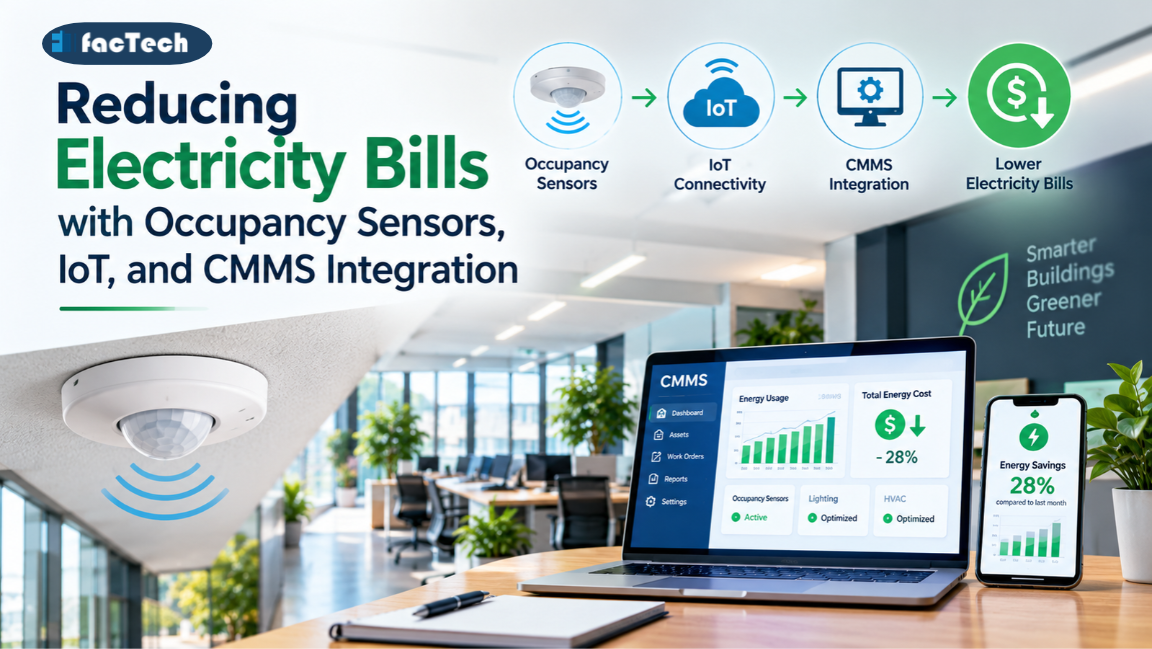
IoT occupancy sensors put on the ceiling, smart access badges and Wi-Fi network connections can assist AI analytics map the real-time presence of individuals in different regions of a facility. The AI platform automatically works out the ideal air flow and illumination levels, cutting down the HVAC output and dimming the lights in conference rooms or office floors that are not being used.
HVAC optimisation for forecasting the weather
Traditional thermostats only react until the indoor temperature has already changed. Local weather forecasts, measures of solar radiation and humidity trends are ingested by AI analytics tools to predict heat demand. If the AI predicts a hot afternoon, it will pre-cool the facility in the morning when prices are less rather than straining the system and facing high energy prices in the afternoon.
Load Shifting and Peak Demand Charge Management
Commercial buildings face heavy fines from utility companies depending on their single highest 15 minute peak power usage throughout a billing period. AI analytics provide real-time monitoring of electrical consumption. As total power use nears pre-set safety limits, the AI system selectively drops non-critical electrical loads — dimming hallway lights slightly for example, or staggering water heater cycles — to decrease peak demand and avoid hefty utility penalties.
Key Operational Benefits of AI-Driven Energy Savings
AI analytics in facilities management can deliver substantial financial, environmental and operational benefits:
| Operational Benefits | Description |
|---|---|
| Lower Utility Expenses | Automated optimisation reduces building electricity and heating expenses, potentially saving 15% to 30% annually. |
| Extended Equipment Lifespan | Prevents short cycling and mechanical overwork, helping extend the working life of costly chillers, boilers, and AHUs. |
| Reduced Carbon Footprint | Reduces overall energy consumption (kWh), helping organisations achieve their net-zero and ESG sustainability objectives. |
| Optimized Maintenance Teams | Shifts maintenance professionals from reactive emergency repairs to planned and targeted preventive maintenance activities. |
| Improved Occupant Comfort | Enables better indoor air quality (IAQ) and temperature control, improving occupant comfort and satisfaction. |
Integration: linking AI analytics with CMMS and IoT networks
AI analytics shouldn’t be a solo effort if it’s to be most effective. The actual power of smart facility management is when artificial intelligence algorithms are incorporated into cloud-based Computerised Maintenance Management Systems (CMMS) and Internet of Things (IoT) hardware networks.
The Integrated Workflow in Practice:
Detection: An IoT sensor on an executive office floor detects that air supply temperatures are not cooling the room even when the chiller is functioning at 100% capacity.
Analysis: The AI analytics engine looks at the data payload and determines that there has been a failure in an air handler damper and reckons the fault is costing the facility $50 per day in wasted electricity.
Automated Action: The AI platform communicates with the cloud-based CMMS through API and automatically creates a high priority work order. It allocates the repair ticket to the next available HVAC specialist, connects the specific location of the device and identifies the replacement items required.
The end-to-end integration removes the need for manual data entry, shortens time-to-repair and ensures that operational inefficiencies are remedied instantly.

Best Practices for Implementing AI Analytics in Your Facility
Facility leaders should consider the following best practices to get a return on investment (ROI) when implementing AI analytics software in corporate buildings:
Comprehensive Sensor & Infrastructure Audit
Before you install the software, make sure your existing building management system (BMS) and sub-meters are functioning properly. Calibrate the important temperature, pressure, and flow sensors to ensure the AI engine receives accurate input data.
Opt for Open-Protocol, Cloud-Based Software
Choose AI analytics applications that enable universal open protocols like BACnet, Modbus, MQTT and REST APIs. Open platforms are also compatible with existing equipment from other manufacturers. This avoids being locked into a vendor.
Start with High-Energy Impact Areas
Implement AI analytics step by step. Begin with high-consumption zones like primary chiller plants, main boiler rooms and large multi-story HVAC zones, and then extend software controls to smaller periphery areas.
Train Facility Staff to Respond to AI Insight
Technology can’t fix physical hardware on its own. Train your facilities management team, building engineers and personnel to read AI data dashboards, prioritise repair orders with high ROI and trust automated diagnostic suggestions.
The bottom line
AI analytics transforms raw building data into continual, automated efficiency, helping facility managers uncover lost energy and minimise expenditures. The AI platform solution eliminates hidden operational waste in lighting, cooling and heating systems by integrating real-time IoT sensor-based monitoring, automatic problem identification and predictive HVAC controls. Combining AI analytics with today’s CMMS and building automation systems means mechanical problems may be located and corrected rapidly. As a property manager, if you want to reduce monthly utility bills, extend the life of your equipment and hit those high-flying corporate sustainability objectives, the smartest, most profitable thing you can do is start leveraging AI data.
FAQs
Q1: How does AI analytics identify hidden energy loss in a building?
A: AI analytics integrates with building management systems and IoT sensors to monitor real-time energy consumption. It identifies hidden problems such as stuck valves, clogged air filters or heating and cooling running at the same time, and promptly warns managers.
Q2: How do AI analytics and occupancy sensors work together to reduce electricity consumption?
A: Occupancy sensors help to monitor human presence in different rooms or office floors. Then AI analytics takes this real-time data and automatically dims the lights and turns down the heating or cooling in empty places, so that energy is only consumed when people are actually there.
Q3: How does AI help with peak demand electricity charges?
A: The AI is constantly checking the entire power draw. The AI will also temporarily cut non-essential loads when energy use nears pricey peak limitations set by utility companies. This can mean dimming the hallway lights a bit or staggered the water heaters to avoid hefty utility penalties.
Q4: How does AI analytics work with a CMMS to support maintenance?
A: If AI detects an equipment issue, it automatically links to a cloud-based CMMS via API, creating a high-priority maintenance order. It assigns the ticket to a technician with the exact defect location, the spare parts needed and the projected cost of waste.
Q5: What are the major financial and operational benefits of AI analytics in facilities?
A: Facilities can save utility expenses by 15% to 30% per year. By lengthen the life of costly equipment (such chillers and boilers), reduce carbon emissions, and transfer maintenance workers from reactive repairs to scheduled preventive work.
Ready to Transform Your Facility Management?
See how Factech automates maintenance, assets, and compliance in one intelligent platform.
Let's Talk
Have questions about our AI-powered solutions? Our team is here to help you digitize your facility operations.