Why Feedback Management Is Critical for Better Facility Services and User Satisfaction
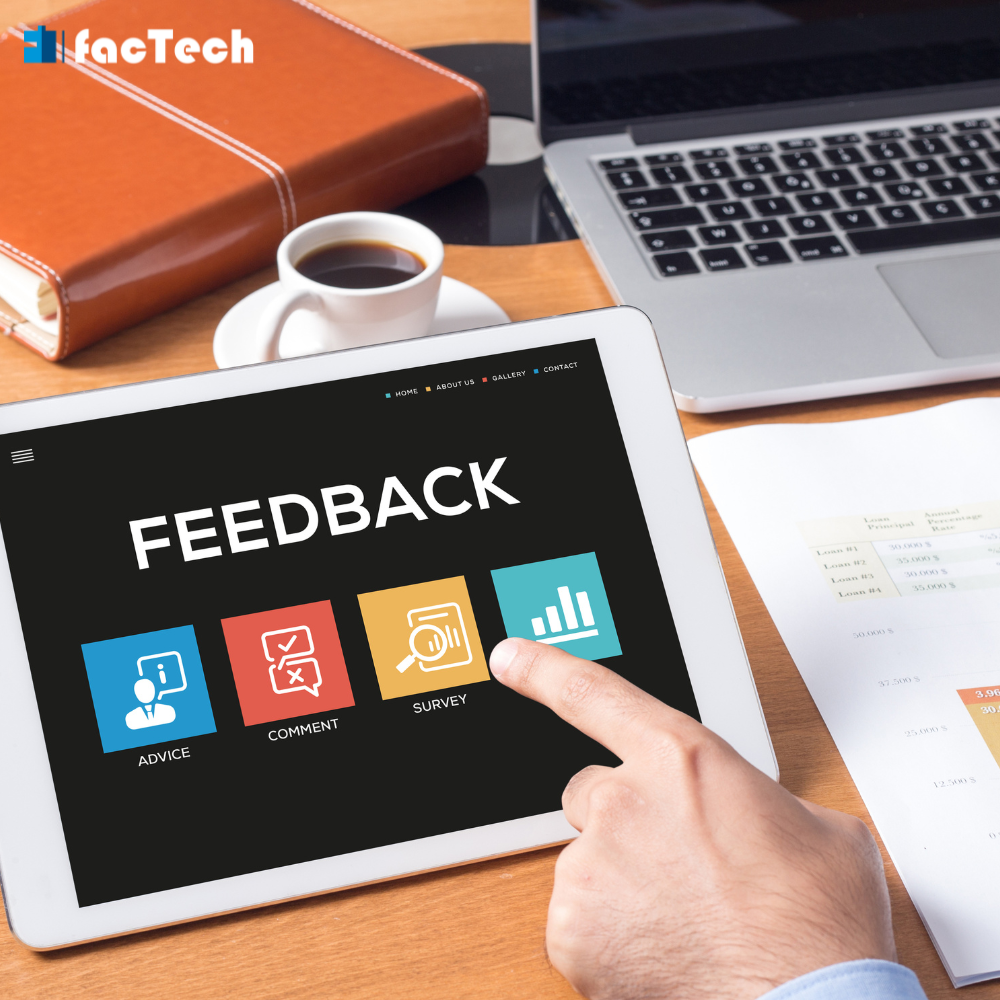
The customer-driven marketplace of today rewards companies who truly listen to their customers and then act on their comments. A feedback management system is a sophisticated solution that allows companies to quickly collect, evaluate, and respond to consumer feedback. This technique allows organizations to improve their products and services and to develop better relationships with their customers. Let’s see how a successful FMS may increase customer happiness and improve the overall efficiency of the facilities.

What is the Difference Between a Customer Complaint and Customer Feedback?
What is a customer complaint? A customer complaint is a negative response to a specific issue. Customer feedback is more general, good or negative comments, ideas, and compliments. Complaints identify difficulties, but feedback gives a full view for betterment and progress.
To get into it:
Customer complaints tend to be about specific issues. Often they are reactive and entail negative emotions, clients expressing displeasure with a service or problem with a product. It can be a problem that messed with their workflow or a feature that wasn’t obvious and frustrated them.
Customer feedback is more general, though. It could be favorable, neutral, or negative. It has praise, suggestions to improve the product, and even extensive insights into user preferences.
What is a Feedback Management System?
A feedback management system is a computerized interface between the occupants of a building and the administrators of that facility. Rather than suggestion boxes that gather dust or random emails that fall through the cracks, these systems gather comments, complaints, and kudos from users through applications, QR codes, or simple web forms.
It converts raw data into a simple-to-understand to-do list for maintenance staff. It’s not just about gathering data, it’s about making sure that data actually translates into action.
How can a Feedback Management System Aid Facilities Management?
Keep Your Ear to the Ground
The most immediate benefit from a decent feedback solution is undoubtedly to be aware of what’s going on. Facilities with excellent employee participation can use feedback to swiftly flag any concerns in operations that need immediate action. Routine checks by facilities staff to ensure that everything is as it should be may not be the best technique to oversee operations. The customers armed with the capacity to give feedback is undoubtedly a better technique.
Track Consumption Correctly
Feedback on the replenishing of consumables is gathered, and data is generated on the usage. A good analytics engine can utilize this in conjunction with actual consumption data to provide insights on wastage. Tracking consumption is the first step in minimizing wastage. This will help in getting one R (reduction) right from the 3 Rs of green initiatives. In addition to this, input is being gathered on HVAC operations, which can be combined with real power usage data to produce insights on carbon footprint from operations and how they could be decreased.
Better Manage Vendors
Managing facilities includes HVAC, cleaning, consumable refills, electrical maintenance, etc. Typically, corporations collaborate with various vendors for each capability or outsource facilities management to a company with numerous providers. Curation based on these functions or, more crucially, companies managing them would help send feedback to the proper person fast and collect function or vendor-specific data for analytics. Normalizing vendor performance data allows for apples-to-apples comparisons. With vendor-specific performance data, facilities management can better communicate and get what they want in daily follow-ups and year-end contract renewal conversations. As dispersed operations involve several geographically distant facilities, vendor data becomes even more critical so central management can remotely assess vendor performance.
Useful for Insight
Analytics can recognize patterns and relationships in the data, with feedback data created on the different functions of facilities such as HVAC, house-keeping, etc. A good analytics engine, along with other operational data that can be given to the system, can yield actionable insights. Such insights can be beneficial in discovering difficulties and adjusting operations.
Meet Operational Objectives
A good feedback system gives a substantial boost to reaching operational targets or KPIs with insights and actions on the findings. Empowered and pleased personnel would definitely enhance the ‘Employee Satisfaction Index’ and improve ‘Workforce Productivity’ metrics. Insights can also help to fine-tune planned maintenance better so that the ratio of ‘Reactive vs Pro-active Maintenance’ is lesser. Accurate consumption tracking and decrease in wastage should be used to optimize costs. A solid feedback system would record actionable feedback thus making sure facilities management team can act on it instantly boosting SLA adherence.
The Financial Advantages
Some business owners believe investing in a feedback system is an expense. It saves money in fact. Monitoring performance and resolving minor problems quickly can add years to the life of your building’s equipment. You also cut down on the time personnel spend doing manual inspections. They don’t have to travel around and check every toilet and light, they can just go where the feedback instructs them to go.”
How to Select Best Feedback Management Solution for your Facilities Service?
1. Ease of Use for All Users
But the most essential thing is whatever system you use, it has to be simple for everybody to use. If you force a user to fill out a long, confusing form just to report a broken light, they’ll simply quit up. Look for an alternative that has rapid options, including mobile apps or simple QR codes. When it’s easy you get better input from your users, which helps you solve problems faster and makes your building users a lot happier in the long run.
2. Customization & Branding Choices
Every facility is different, so your feedback tool needs to be adaptable enough to match your specific demands. A good platform allows you to design forms, to ask the relevant questions for your specific space. A white labeled mobile app (with your logo and branding) also helps develop professional trust with your tenants or employees. When the system appears to be your organization’s, users feel more confidence that their opinion is heard by management.
3. Integration into legacy systems
A great feedback system should not work alone, it should talk to your other tools. When feedback is included directly into your core management platform it’s a seamless procedure. For example, if a user detects a leaking pipe, the program should automatically generate a work order for the maintenance crew. This saves time, avoids essential communications from getting lost in email, and guarantees that all input is really responded to by your personnel.
4. Real-Time Tracking & Reporting
You need a system that tells you what’s happening. When a user gives feedback, you should be able to see it right away on your dashboard. This allows you to measure time to resolution and whether your team is hitting service level targets. With real-time data, you can see where in your facility you need to focus the most, allowing you to make informed, data-driven decisions instead of guessing what has to be corrected today.
5. Automated Notification and Escalation
Your feedback system must be intelligent enough to notify the right person straight away. If the complaint is related to a major issue, the software should inform the maintenance manager without any delay. In addition, the system should immediately escalate the issue to a higher supervisor if a task is not performed within a defined period. This guarantees that no request is ever overlooked or forgotten, which is essential to uphold high standards of service and confidence within your facility.
6. Trend Analysis Skills
The greatest systems go beyond simply collecting isolated complaints; they enable you to grasp the overall situation. Look for software that gives clear charts and reports showing common concerns. If you have a hundred complaints about the same corridor, you know you have an issue that repeats itself and needs a permanent fix. These trends help you transition from merely addressing little breakdowns to truly enhancing the overall quality and safety of your facility, saving you money and effort in the long run.
Enhance Facility Services with the Best Facility Management Software
If you really want to improve your facility services, you need an all-in-one platform like Factech that brings together everything you do in your building. Integrating your feedback management system into a wider, intelligent platform makes it more than simply a “suggestion box” — it becomes a strong tool for action. Incorporate feedback in modules such as asset management, preventative maintenance, etc., to ensure that user reports are converted into real work orders. This means no manual follow-ups, because the system will route the task automatically to the proper professional, ensuring every user issue is treated fast and accurately.
A full-featured facilities management solution gives you real-time visibility into the health of your location. Factech leverages AI, such as its “Netra” agent, to fuse tenant complaints with sensor data to identify issues before they lead to a breakdown. Control your facilities from one platform and your team will cease “firefighting” emergencies and start planning for improved service. This data-driven strategy ensures you are spending your budget on what matters, resulting in higher efficiency, reduced costs and a much better experience for everyone who uses your building each day.
Conclusion
A strong Feedback Management System is not simply a “nice to have” anymore for facility management, but the heartbeat of a modern, responsive building approach. With the knowledge and tools to break free from reactive, manual procedures and move towards an integrated, data-driven approach like Factech, you can make user feedback a powerful engine for improvement.
When you give your inhabitants a voice and provide your team with automatic, intelligent tools to act on that information you do more than change faulty light bulbs, you establish a culture of trust, accountability and operational performance. Ultimately, the proper technology bridges the gap between management and users, ensuring your facilities are not only maintained to the highest standards but are also smarter, more efficient and better suited to the demands of the people who call them home or workplace. Investing in these systems is investing in the long term success and sustainability of your infrastructure.
FAQs
Q: What is the difference between a Feedback Management System and a simple complaint box?
The typical suggestion box often includes notes that go unread or emails that get lost in the shuffle. A Feedback Management System is a digital, automated interface. It captures customer feedback, whether it’s a complaint or a recommendation, through applications or QR codes, transforming that raw data immediately into an organized, trackable to-do list for maintenance staff, making sure no issue slips between the cracks.
Q: Can a feedback system actually aid in reducing the facility operating costs?
Yes. Real-time issue tracking with feedback means maintenance teams may move from “firefighting” emergencies to proactive, scheduled maintenance. That helps to avoid serious equipment failures, extends the life of building assets and minimizes the need for manual, time intensive inspections, saving significant money and operational effort.
Q: Why integrate feedback management with other facility software?
By connecting your feedback system to your core management platform, you establish a seamless workflow. For example, when a renter reports a plumbing problem, a service order can be generated immediately for the proper specialist. This bridges manual communication gaps, accelerates resolution times and ensures your team is working with correct, data-driven goals.
Q: How an AI-powered facility platform enhances customer satisfaction?
Platforms like Factech employ AI agents to mix human feedback and sensor data. This enables the system to discover potential issues such as a decline in the performance of equipment before the user may even see them. The platform addresses problems early and informs the consumers about the status of their requests, which promotes greater trust, comfort, and greater user happiness.
Q: What is the key characteristic to consider in a feedback solution?
The most important is the ease of use for the end user. Users will not participate if the system is complicated or has extensive forms. Look for solutions with instant access alternatives like mobile apps or QR codes. And less work means more accurate data – the kind you need to make the right decisions to increase the overall quality and safety of your facility.
Ready to Transform Your Facility Management?
See how Factech automates maintenance, assets, and compliance in one intelligent platform.
Let's Talk
Have questions about our AI-powered solutions? Our team is here to help you digitize your facility operations.